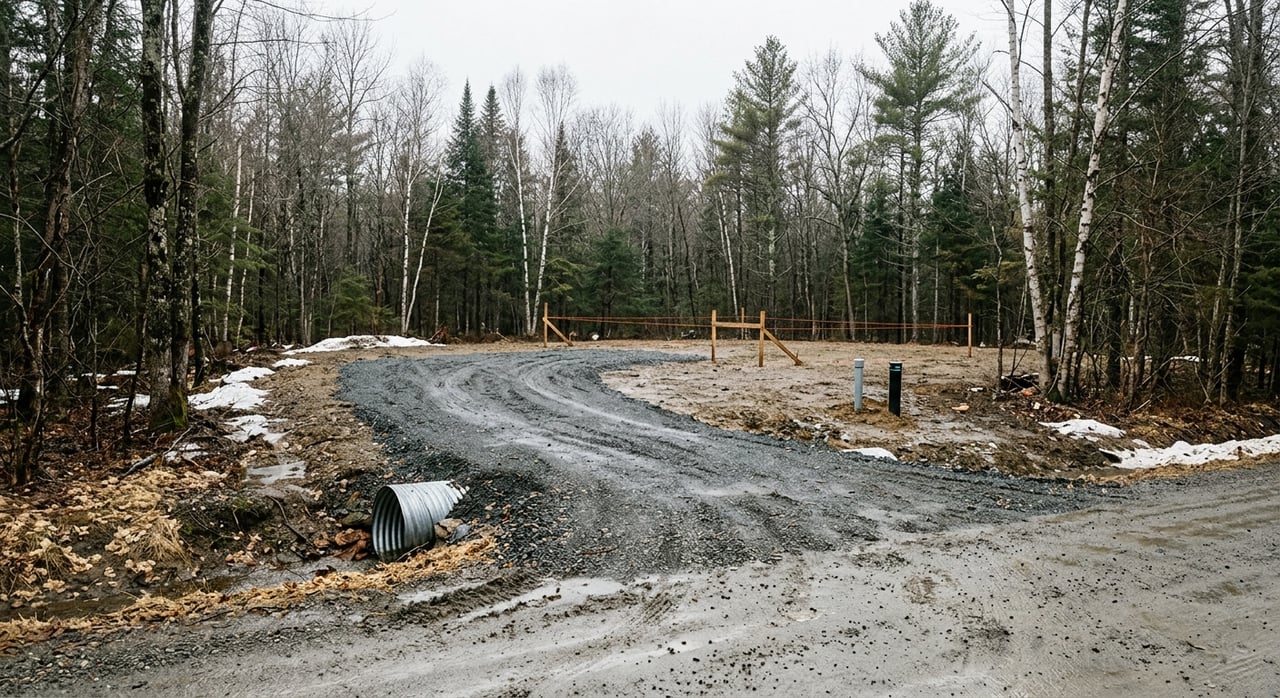
If you have ever fallen in love with a beautiful piece of Vermont land, you know how quickly excitement can take over. In Ferrisburgh, though, the real question is not just whether a parcel looks perfect. It is whether that land can legally and practically support the custom home you want to build. This guide walks you through the biggest issues to check before you buy, so you can move forward with more confidence. Let’s dive in.
Start With Buildability, Not Beauty
A field, a view, or a wooded setting can be very appealing, but those features do not confirm that a parcel is ready for your plans. In Ferrisburgh, zoning is the first filter for buildability. The town states that all land development requires a permit, and zoning permits are required for most construction and land-use changes.
Subdivision matters too. If a parcel has been or will be divided into two or more lots, the Planning Commission reviews that process. That means you should confirm not only what the lot looks like today, but also how it was created and whether that history affects your ability to build.
Check Ferrisburgh Zoning Early
Ferrisburgh’s current land use regulations were approved on March 2, 2021, and the town is also posting draft 2026 revisions. Because rules can change, you should verify the latest parcel-specific requirements before relying on an old listing sheet, map, or conversation.
The town’s district system includes RR-2, RA-5, CON-25, HMU-2, IND-2, SD-2, NFVIL-2, and FTC-1. Current bylaw excerpts show a 2-acre minimum lot size in both RR-2 and SD-2. A parcel can be marketable and still not work for your intended home footprint, septic layout, or driveway placement if it sits in the wrong district or is already nonconforming.
Why district rules matter
District rules can affect much more than lot size. They can shape setbacks, placement options, access design, and whether your preferred home site is realistic. That is why your first call should be to the zoning administrator, not to a builder.
Ferrisburgh’s own building guidance recommends contacting the zoning administrator first, reviewing district rules, preparing a site plan if needed, and then applying for permits in the proper order. That sequence can save you time, money, and frustration.
Evaluate Shoreland and Waterfront Limits
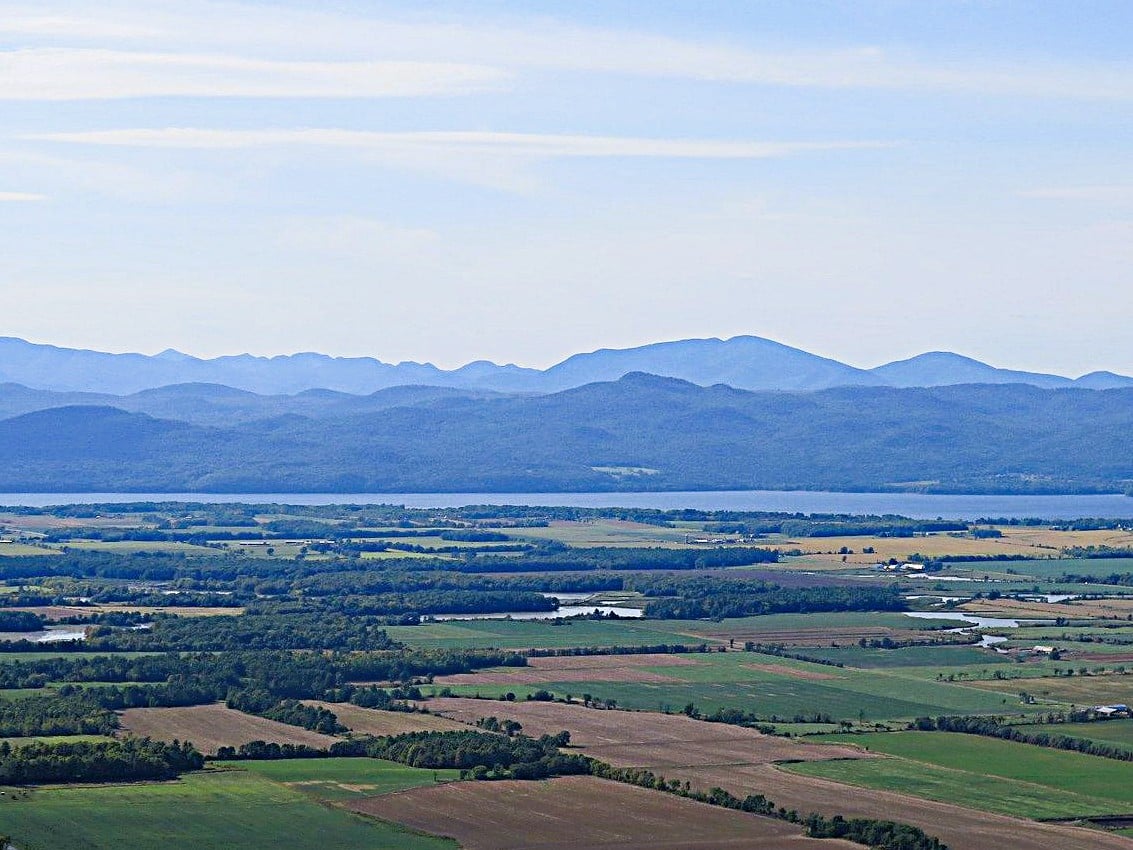
Ferrisburgh’s Lake Champlain setting is one reason buyers are drawn to land here. The town has about 21 miles of Lake Champlain shorelands, and shoreline parcels may offer views, access, and long-term appeal. At the same time, lake-adjacent land often comes with added review, higher costs, and narrower design options.
Ferrisburgh’s shoreland materials explain that Vermont’s Shoreland Protection Act regulates activity within 250 feet of the mean water level of lakes larger than 10 acres. The town also notes that the zoning boundary along Lake Champlain is interpreted from the mean high water mark at 98 feet above sea level. On waterfront or near-water parcels, a current survey becomes especially important.
Shoreline review can affect site design
The town plan says the Lake Champlain planning area is intended for seasonal and year-round homes, with development reviewed for riparian setbacks, erosion, wastewater pollution risk, habitat, and scenic or view impacts. In plain terms, that means your ideal building site may not be where you first imagined it.
If you are considering a lot near the lake, ask early about setbacks, flood exposure, septic feasibility, and where access can realistically go. A parcel close to the water may command a premium, but that premium does not remove the technical work needed to confirm buildability.
Understand Wetlands and Flood Constraints
Wetlands and river corridors can limit what you can do with a parcel, even when the acreage seems generous. Ferrisburgh’s town plan says qualified wetland review may come from a Vermont DEC wetlands ecologist or a wetland consultant, and preliminary wetland screening results are not binding.
That point matters. An online map or informal opinion is not the same as a site-specific determination. If a parcel is near wetlands, streams, or the lake, you should treat wetlands review as a core part of due diligence.
Buffers can reduce usable land
According to the town plan, Class II wetlands generally carry a 50-foot minimum undisturbed buffer. River corridors and flood-prone areas are also identified as key constraints that should be mapped before a purchase is finalized.
This is one reason large parcels are not always simple parcels. A lot may have plenty of acreage on paper, but much less usable area once buffers, setbacks, and environmental constraints are considered.
Focus on Septic and Water Feasibility
For many Ferrisburgh land buyers, septic and water are the biggest technical issues of all. The town plan says essentially all residents and businesses rely on soil-based on-site wastewater systems. It also notes that much of the town has soils that are only marginally suitable for conventional septic and may require mound-type systems.
That can have a direct impact on cost, layout, and even whether your preferred house site is feasible. In some cases, the best place for the home is not the best place for the septic system, and the relationship between the two becomes the main design challenge.
Buildable land is not always simple land
Ferrisburgh’s town plan says the best wastewater soils often overlap with good agricultural soils. That helps explain why available land and buildable land are not always the same thing. A parcel may look open and easy to develop, but the soils may tell a more complicated story.
For an early screening tool, the USDA NRCS Web Soil Survey can help with land-use decisions. Still, it should be paired with site-specific testing and professional review before you make assumptions about a homesite.
Water supply is parcel-specific
The town plan says Ferrisburgh does not appear to have extensive high-yield bedrock or sand-and-gravel aquifers. It also says wells can be vulnerable to contamination and yield variation. That means you should treat water supply as a parcel-specific issue, not a box to check later.
Some parts of town do have public water. The plan says roughly 40 percent of households, mainly in southern and western Ferrisburgh, are on public water supplied through 12 private pipelines linked to the Vergennes-Panton Water District. The rest of town relies largely on wells, and there is no municipal sewer system.
Know the Permit Path Before You Close
State permitting comes into the process earlier than many buyers expect. Vermont DEC issues Wastewater System and Potable Water Supply permits for soil-based wastewater systems under 6,500 gallons per day, potable water supplies that are not public, and municipal water or sewer connections. DEC application instructions say the landowner must obtain all necessary permits before starting the project.
The designer you hire also matters. Vermont DEC says Class A and Class B designers can design one single-family potable water supply, while Class B designers can also handle more complicated wastewater systems. The state also notes that septic installers are not currently licensed.
A smart local team saves time
Ferrisburgh’s own guidance recommends contacting the zoning administrator first and preparing a site plan with a surveyor or engineer when needed. For many buyers, the most useful team includes the zoning administrator, a Vermont-licensed surveyor, a licensed wastewater designer or engineer, and a wetlands consultant if the land has environmental constraints.
When you bring those professionals in early, you can spot issues before they become expensive surprises. That is especially valuable in rural transactions, where conditions on the ground often matter more than what appears in a listing description.
Do Not Overlook Access and Driveway Rules
A custom home site also needs practical, legal access. Ferrisburgh’s highway forms page says an access permit is required to create, modify, or change the use of a connection between private property and a public roadway. The town’s building guidance also says a new or modified driveway on a town road needs an Access/Curb Cut permit.
Vermont’s Section 1111 law requires a permit for work affecting a public highway right-of-way on either the state or town system. If your future driveway touches a public road, that issue needs to be confirmed early.
Rural access affects more than convenience
In Ferrisburgh, access is not just about where a driveway fits on paper. Road geometry, drainage, snow storage, and turnaround space can all affect whether a lot is practical for a custom home.
The town plan also notes that shared driveways and shared utilities can be used to reduce landscape impacts in some areas. That means access design may be part of the approval conversation, not just a construction detail left for later.
Confirm Utility Service Costs
Utility availability is not uniform across Ferrisburgh. Even when electric or broadband is nearby, line-extension costs can change your budget quickly. Before you close, confirm available service and parcel-specific extension costs directly.
This is one of the most common land-buying mistakes. Buyers focus on acreage and views, then discover that utility routing, access improvements, or water and wastewater work will add significantly to the total project cost.
A Practical Due Diligence Order
When you are buying land in Ferrisburgh for a custom Vermont home, a clear process can help you avoid costly guesswork. A sensible order, based on the town’s permit structure and local site constraints, looks like this:
- Confirm the zoning district and any overlays.
- Verify frontage, easements, and boundary details.
- Check shoreline, wetland, river corridor, and flood constraints.
- Screen soils and septic feasibility.
- Confirm well or public-water options.
- Review driveway access and road practicality.
- Estimate utility availability and extension costs.
- Build contract contingencies around those findings.
That sequence helps you answer the most important question first: can this parcel support a house, driveway, septic system, and reliable water source in the place and form you want?
Why Local Guidance Matters
Buying land is different from buying an existing home. With raw land, many of the most important answers are not visible during a quick showing. In Ferrisburgh, the details that matter most are often zoning, soils, water, access, and permitting.
That is why local, hands-on guidance can make such a difference. When you have someone helping you connect the listing, the town process, and the technical professionals involved, you can make decisions with a clearer picture of risk, cost, and opportunity.
If you are considering land in Ferrisburgh or anywhere nearby in Addison County, Berkshire Hathaway HomeServices Vermont Realty Group can help you evaluate the property, coordinate the right local questions, and move forward with more confidence.
FAQs
What should you check first when buying land in Ferrisburgh?
- Start by confirming the parcel’s zoning district, current land use rules, and whether the lot can support your intended home, septic, and access layout.
Does all land development in Ferrisburgh require a permit?
- Yes. The town states that all land development requires a permit, and zoning permits are required for most construction or land-use changes.
Do shoreline parcels in Ferrisburgh have extra rules?
- Yes. Activity within 250 feet of the mean water level of qualifying lakes is regulated under Vermont’s Shoreland Protection Act, and shoreline parcels may also face flood, setback, erosion, and wastewater constraints.
Are wells and septic systems common in Ferrisburgh?
- Yes. The town plan says essentially all residents and businesses rely on soil-based on-site wastewater systems, and much of town also relies on private wells.
Can a large Ferrisburgh parcel still be hard to build on?
- Yes. Wetlands, buffers, flood-prone areas, river corridors, lot configuration, soils, and access limits can all reduce the usable building area.
Do you need a driveway permit for a new home site in Ferrisburgh?
- Yes. A new or modified driveway on a town road needs an Access/Curb Cut permit, and work affecting a public highway right-of-way also requires the appropriate permit.
Is public water available everywhere in Ferrisburgh?
- No. The town plan says roughly 40 percent of households are on public water, mainly in southern and western Ferrisburgh, while the rest of town relies largely on wells.
Who should be on your due diligence team for Ferrisburgh land?
- A strong team often includes the zoning administrator, a Vermont-licensed surveyor, a licensed wastewater designer or engineer, and a wetlands consultant when site conditions call for it.